Book Now Quote
Book Now Quote
Services
All Services Interior Detailing Full Detail Exterior Detailing Ceramic Coating Paint Correction Pet Hair Removal
Work — sort by
View all cars Luxury Cars Exotic & Performance JDM & Japanese German Cars American Cars Italian Cars Korean Cars Befores & Afters
View by car brand
Acura Alfa Romeo Audi BMW Dodge Ferrari Fiat Ford Honda Hyundai Infiniti Jeep Kia Land Rover Lexus Maserati Mazda Mercedes-Benz Porsche Subaru Tesla Toyota Volkswagen Volvo
Learn
Guides Our Process FAQ
Company
Service Areas Reviews Contact
Call or Text
Home Services Gallery Reviews Service Areas FAQ Ceramic Coating Call (415) 360-1964 Book Now →

The Scale Breakdown

The 5 things I’d focus on if I had to build my service business from zero again.

I grew my mobile detailing business to over $10K/month. These are the five areas I’d focus on first if I had to start over — plus the actual actions I’d take inside each one.

Free No sign-up ~12 min read

You commented SCALE — this is the whole thing, written out. Start at Step 1, or jump to wherever you’re stuck.

Step One

01 Learn the Trade

Before you worry about scaling something, make sure what you’re selling is actually worth scaling.

A service business can survive for a while on good marketing and average execution. Marketing gets someone to book once. It doesn’t get them to book again, tell their neighbour, leave a review, or accept your price when you raise it next year. All of that comes from the work itself.

That part is slow, unglamorous and impossible to skip. Whatever the trade is — detailing, cleaning, landscaping, pressure washing, photography, any of the trades or home services — the first job is making the result repeatable, not making the calendar full.

The mistake I see most is treating this as a phase you graduate from. It isn’t. It’s the thing that quietly decides whether everything else you build has anything solid underneath it.

The Test

If ten customers booked tomorrow, could you give all ten roughly the same result?

If the answer is no, then getting more customers isn’t the first problem to solve.

Ten inconsistent jobs isn’t ten chances to grow. It’s ten chances to build a reputation you then spend a year undoing.

What I’d do

  1. Learn the correct process, not the fastest one.
    Find out how the work is actually supposed to be done — manufacturer instructions, trade forums, people doing it full time. For detailing that meant learning what each chemical is for and what surface it’s safe on before I bought anything.
  2. Practice until the result repeats.
    Your own car, a friend’s, family. The goal isn’t one great result. It’s the same result three times in a row, on three different starting conditions.
  3. Write down every mistake.
    One running note: what went wrong, what caused it, what you’d do differently. That note is worth more than any course, and it becomes your training material the day you hire someone.
  4. Turn it into a checklist.
    Once you can get the result reliably, write the order of operations down — steps, products, roughly how long each takes. A checklist is what stops a tired version of you at 6pm from skipping something.
  5. Get faster without cutting steps.
    Real speed comes from setup, sequence and having the right tool already in reach. It doesn’t come from doing less. If getting faster costs you quality, you got faster at the wrong thing.
  6. Ask early customers what they actually noticed.
    Not “how was it?” — nobody answers that honestly. Ask what stood out, and what they’d have liked done differently. People will tell you things in that phrasing they’d never volunteer otherwise.
  7. Document your best work properly.
    Consistent angles, decent light, before and after. You will need it for your website, your content and every pricing conversation you ever have. Work you didn’t document is work you can’t sell with later.
Don’t scale a broken service

More leads don’t fix an inconsistent service. They multiply it. Every weakness in how you work gets copied onto every new customer:

  • An inconsistent result becomes an inconsistent reputation.
  • A slow process becomes a scheduling problem.
  • An unclear scope becomes an argument at the end of every job.
  • A price you set too low becomes a price you’re stuck with forty times over.
What that looks like in detailing
  • Knowing which product belongs on which surface — and which combinations damage something.
  • Technique that doesn’t create new problems. A wash that adds scratches isn’t a wash.
  • Being honest about what can and can’t be corrected. Some scratches are through the clear coat. Saying so upfront beats a disappointed customer.
  • The finish: glass with no streaks, no dressing sling on the paint, nothing left sitting in the panel gaps.
  • Walking the whole car before handing it back — in daylight, with the customer there.

Porsche GT3 after an exterior detail in Presidio Heights, San Francisco
Porsche GT3Presidio Heights · Exterior detail
BMW M3 Competition driver-side front door after paint correction and ceramic coating in the Outer Sunset, San Francisco
BMW M3 CompetitionOuter Sunset · Correction & coating
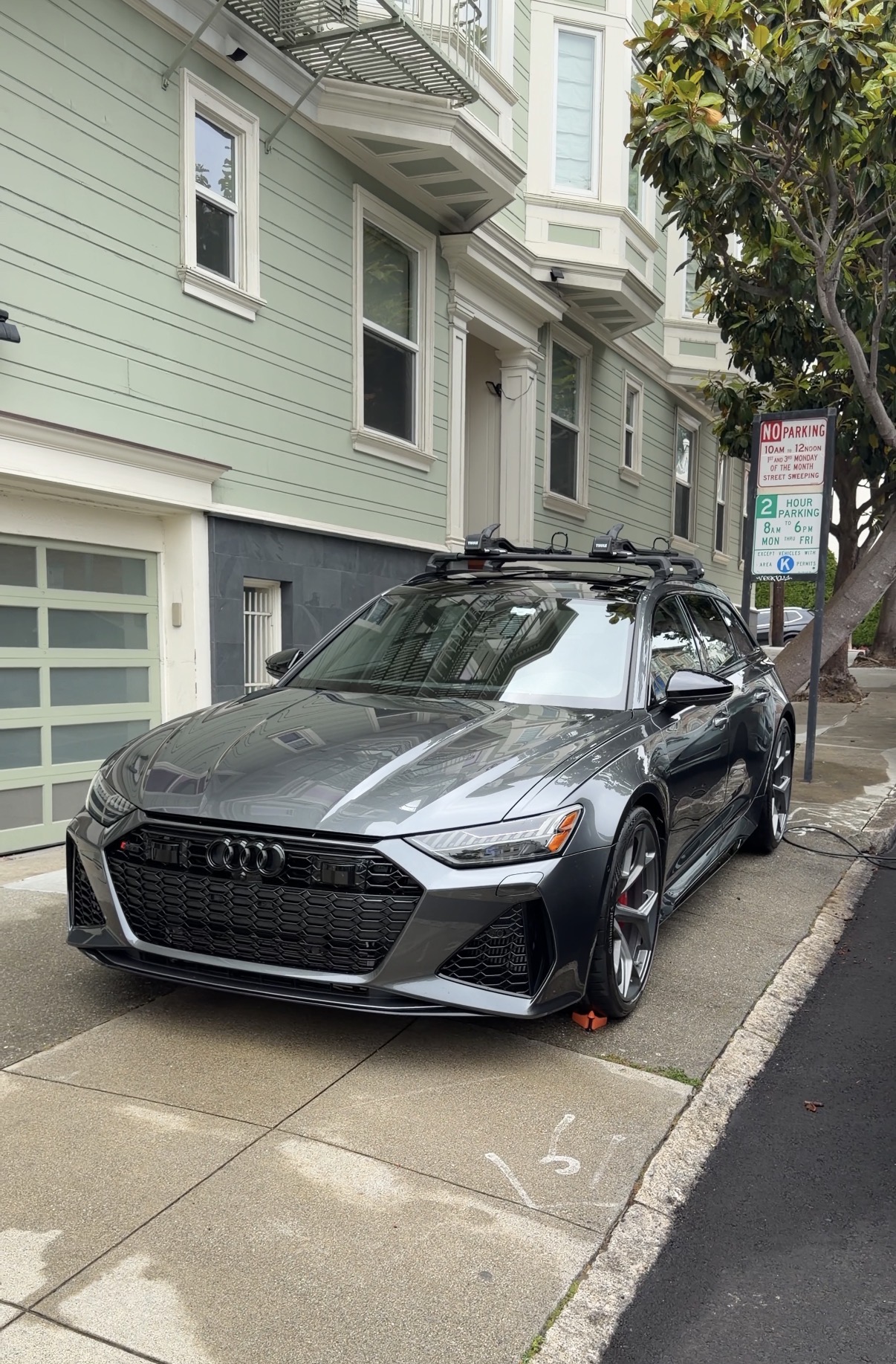
2026 Audi RS6 after a full interior and exterior detail in Cow Hollow, San Francisco
2026 Audi RS6Cow Hollow · Full detail

Real SF City Wash jobs. Cars like these don’t book you because you advertised at them — they book you once the work is consistent enough that someone will trust you with something expensive. That trust is built in Step 1, not in an ad.

Step Two

02 Build the Brand

A brand isn’t a logo. It’s the expectation somebody forms about you before they ever pay you.

By the time someone messages you, they’ve already guessed roughly what you cost and roughly how good you are. They got there from your photos, your website, the way your last caption was written, and how quickly the last person replied to them. Your job is to make sure that guess is the one you actually want.

That’s why brand is bigger than design. It includes your name, your visual identity, keeping colours and fonts the same everywhere, how you position the service, how your offers are structured, how the price is presented, your website, your social profiles, your photography, how you write a reply, and what it feels like to actually book you.

None of those need to be expensive. They need to agree with each other. A premium price next to phone photos taken in a dark garage doesn’t read as premium. It reads as confusing, and confusion loses the sale more often than price does.

The cheapest brand fix

Open your website and your social profile side by side on a phone.

Different logo? Different colours? Different services listed? A price on one and not the other?

Fixing that costs nothing and does more than a rebrand. Most small service businesses aren’t losing on design quality — they’re losing because their two front doors describe two different companies.

Brand =
What you sellThe services, what’s included, what isn’t, and who it’s for.
How it looksLogo, colours, photos, the website, the van, what you turn up wearing.
How you talkYour replies, your quotes, your captions, how you handle a complaint.
How it feels to buyHow easy it is to get a price, book a time, and know what happens next.

Decide who you’re trying to attract

Three detailing businesses on the same street can be three completely different companies. Same trade, same city, incompatible brands:

Cheapest wash in town Competes on price and availability, needs volume to work. Every decision points at fast and affordable — simple offers, quick turnaround, low friction.
Dealership / volume operation Competes on throughput and reliability. The customer is a business, not an owner. Pricing is per unit, negotiated, and the pitch is we will never slow your lot down.
Enthusiast correction shop Competes on skill. Sells to people who already know what a polisher is. The proof is close-up paint under a light, not a tidy interior.

None of those is the right answer. The point is that they can’t share one website, one price list, one set of photos and one tone of voice. Pick who you’re for, then make everything downstream agree with it.

For us that meant deciding early that we were the convenient premium option: we come to you, the prices are published on the website, and the work has to justify them. That one decision set the pricing, the photography, the tone of every reply, and — just as usefully — what we say no to.

Brand checklist

Tick these off honestly. Anything unticked is a specific job, not a vague feeling that your brand needs work. Your answers stay on this device.

0 of 7 ticked

Step Three

03 Build Your Presence

Being good doesn’t matter if nobody can find you. Early on you need more than one way to be discovered.

There are three channels worth building at the start, and they feed each other. Search brings people who already want the service. Content brings people who didn’t know they wanted it. Reviews and referrals make both of those convert. Ignore one and the other two work harder for less.

1 — Website & search

Don’t build one generic homepage and decide the website is finished. A homepage answers “who are you.” It doesn’t answer the ten things somebody actually types before they’re willing to pay you.

A useful service-business website answers the questions customers are already asking:

  • What exactly do you offer?
  • How much does it cost?
  • Where do you serve?
  • What’s included — and what isn’t?
  • How long does it take?
  • Why should someone choose you?
  • Do you handle my specific problem?

So build pages that answer them: one for each service, one for each area you genuinely serve, one for the questions you get asked constantly, guides for the problems people search at midnight, and pages for the specific situations customers actually arrive with.

One honest rule, because it’s the trap everyone falls into: a page should only exist if it genuinely answers something. Twenty near-identical pages with a city name swapped out is a page nobody wants to read, and search engines have got much better at recognising it.

Where the ideas come from

You don’t need a keyword tool to start. You need to write down the questions leads keep asking you.

Every question a customer asks before booking is a page you haven’t written yet. Every question they ask after booking is a gap in what your page explained.

Keep that list running for a month and you’ll have more genuinely useful pages to build than you have time for.

2 — Content

“Post consistently” is the advice everybody gives and it’s only half of it. Consistency compounds — but only if the content is built to hold attention in the first place. Posting three bad videos a week for a year mostly teaches you how to make bad videos faster.

So learn why content gets attention. The pieces that actually matter:

  • Hook — the first two seconds. If this fails, nothing else in the video exists.
  • Curiosity — an open loop the viewer wants closed.
  • Visual proof — something real happening on screen, not you describing it.
  • Transformation — a visible before and after, in any trade.
  • Pacing — cut anything that isn’t moving the story.
  • Payoff — the loop actually closes. Bait with no payoff kills trust.
  • Retention — the honest scoreboard. Watch where people drop off.
  • CTA — one clear next step, not four.

A framework that works for almost any service business:

HookStop the scroll with the most surprising thing about this job.
ProblemWhat was actually wrong, shown not explained.
ProcessThe interesting part of how it gets fixed.
ResultThe payoff, held long enough to land.
CTAOne next step for the small number who want it.

In detailing that’s literally: “How did this 4Runner get this muddy?” → the before → the wash and extraction → the transformation → where to book. Same shape works for a landscaper, a cleaner, or a photographer with a bad-lighting rescue.

Your early content will underperform. That’s not a verdict, it’s data. Ten videos tell you nothing. Thirty start telling you which hooks people stop for, and that information isn’t available any other way.

3 — Reviews & referrals

This is the cheapest growth available to a service business and the one most people leave entirely to chance. Every completed job should have a next step attached to it — not because you felt like it that day, but because it’s part of finishing the job:

A review request while the result is still in front of them. A follow-up a few days later. A natural moment to mention that you look after friends and neighbours too. And a sensible reason to come back before the work wears off.

None of that happens reliably by memory. If asking for the review depends on you remembering at the end of a nine-hour day, it will not happen — which is exactly what Step 4 is for.

This week
  • Improve one core service page — the one for the service you most want to sell.
  • Post three pieces of content built on the framework above.
  • Ask every completed customer for a review, the same day.
  • Write down the questions your leads keep asking.

Step Four

04 Build Systems

If every customer needs you to personally remember every next step, growth stops being growth and becomes chaos.

At five customers a month you can hold the whole business in your head. At thirty you can’t, and the parts you drop are never the loud ones. You’ll still show up to the job. What quietly disappears is the quote you meant to follow up, the review you meant to ask for, and the customer from four months ago who would happily have rebooked if anyone had asked.

You do not need a large CRM on day one. A notes app, a set of saved reply templates and calendar reminders will carry you much further than people expect. Buy software when you already know the process it’s meant to run — not to find out what your process should be.

Start by writing down what actually happens to a customer, from the first message to the day they book again. Then find the steps you repeat every single time.

The customer journey

New leadDM, form, call or referral.
ResponseSpeed matters more here than anywhere else in the business.
QuoteClear price, clear scope, clear what isn’t included.
Follow-upThe step almost everyone skips, and the cheapest one to fix.
BookingConfirmed time, confirmed address, confirmed expectations.
ServiceThe part you already practised in Step 1.
ReviewAsked the same day, every time, not when you remember.
RebookingThe cheapest customer you will ever get is the one you already have.
The automation test

“Did I do this exact task more than three times this week?”

If yes, it’s a system waiting to be built. In this order:

  • Document it — write down what you actually do.
  • Template it — turn the message or checklist into something reusable.
  • Delegate it — hand it over once it’s written down.
  • Automate it — last, and only once it’s stable.

Automating something you haven’t documented just makes the mess run faster.

Worth systemising early
  • Instant acknowledgement when a lead comes in
  • Quote follow-up if there’s no reply
  • Appointment confirmation
  • Reminder the day before
  • Arrival and access instructions
  • Post-service thank-you
  • Review request
  • Maintenance reminder at a sensible interval
  • One polite check-back on an inquiry that went quiet

A simple system vs. a bad one

No system
  1. Lead messages at 11am while you’re under a car.
  2. You’ll reply properly “tonight.”
  3. Tonight you’re unloading gear and eating dinner.
  4. Tomorrow it’s buried under three newer messages.
  5. Lead books whoever answered first.

Nothing here is a work-ethic problem. It’s a memory problem, and memory is the wrong tool.

A simple system
  1. Lead messages at 11am.
  2. An immediate acknowledgement goes out: got it, here’s roughly what this costs, I’ll come back properly this evening.
  3. You follow up personally that evening, with the real quote.
  4. If there’s no reply in two days, one automatic check-in.
  5. Lead books you, because you were the one who answered.

The automation didn’t replace you. It held the lead’s attention until you were free to be a human.

Don’t turn this into spam

Automation should make your communication faster, more consistent and more useful. It should not make it robotic, and it should never become a queue of messages nobody asked for.

The test before you switch anything on: would I be happy to receive this message, on this day, about this job? If not, don’t send it. One well-timed message beats five automated ones, and a customer who mutes you is harder to win back than one you never messaged.

Step Five

05 Learn to Sell

Advertising doesn’t fix an offer nobody wants. It just buys more people the chance to say no.

Plenty of service businesses start spending on ads the moment the calendar looks thin, then conclude that “ads don’t work for this industry.” Usually the ads worked fine. The offer was vague, the landing page didn’t explain it, and nobody replied to the leads for six hours.

Before spending seriously on advertising, you want honest answers to:

Who actually buys. What they buy. Why they buy it. What problem they’re really trying to solve. What objection stops the ones who don’t. How much they’re genuinely willing to spend. And where your best customers so far came from.

Every one of those is answerable from information you already have — for free, today.

Selling isn’t pushing

For a service business, selling is mostly removing reasons to hesitate.

Answer fast. Say clearly what it costs. Say what’s included and what isn’t. Show work like theirs. Make the next step obvious.

Do those five things better than the other quote they got and you’ll win a lot of jobs without ever sounding like a salesperson.

Start with your own customers

The big advertising platforms have behavioural data on billions of people. A small business doesn’t, and never will. But you have something they can’t sell you: the actual conversations with the actual people who paid you.

That’s a real dataset, and almost nobody reads it:

What they askedLead conversations and the questions that come up before every booking. This is your ad copy, already written by the customer.
What they boughtWhich services actually sell, which get ignored, and what the average ticket really is.
Where they came fromReferral, search, a specific video, a neighbour. The channel that already works deserves the next hour of your time.
Who came backRepeat customers tell you which service creates a relationship rather than a transaction.
Who didn’tLost leads are the most useful and least read list you own. Look for the objection that repeats.
Where they areGeography shapes everything — travel time, pricing, which areas are worth building a page for.
What that looks like in practice

If most of the interior jobs coming in are people about to sell the car, that’s one customer, with one problem: resale value, on a deadline. It becomes a service page, a content angle, an offer and an ad — all pointing at the same thing.

If a second group keeps asking about protecting a brand-new car, that’s a completely different customer, problem, message and creative angle. Same business, two separate sales conversations.

Writing one message for both gets you a message that lands with neither. Most “our marketing isn’t working” problems are actually this.

The frame for any offer

WhoA specific customer, not “anyone with a car.”
ProblemThe thing they actually care about, in their words.
OfferWhat you sell to solve it, priced and scoped.
ProofWhy they should believe you can do it.
CTAOne obvious next step, with no friction in front of it.

Run any ad, landing page, DM or quote through those five. If you can’t fill all five in one sentence each, the problem isn’t your budget.

Before you run ads

Eight things worth being able to tick before you spend real money on traffic.

0 of 8 ticked

The Recap

The order matters.

Each step only works because the one before it is already true. Do them out of order and you spend money making a weak business more visible.

The Distractions

What I wouldn’t obsess over at the beginning

None of these are worthless. They’re just not what the first six months are for, and they’re unusually good at feeling like progress.

The perfect logo A decent, consistent identity is enough to begin with. Consistent beats beautiful at this stage — and you’ll know far more about who you are after fifty customers than you do now.
Expensive software Solve the process before you buy tools for the process. A tool applied to an undefined workflow just gives you a subscription and the same workflow.
Paid ads, too early Ads amplify whatever’s already there. Find out what converts organically first — then pay to put more people in front of the thing you already know works.
Automating everything Automate proven processes, not random ones. An automation built on a guess is a guess that now runs by itself, at scale, without you watching.
Follower count A small local audience that books is worth more than a large one that can’t hire you. Reach is not intent. Watch saves, DMs and bookings before you watch views.
Being everywhere at once Four half-built channels lose to one that actually works. Get one channel producing customers, then add the next.

The Plan

If you’re starting this week, do this.

One job a day, in the order the five steps run. None of it needs money. Tick them off as you go — your progress is saved on this device, so you can come back to it tomorrow.

0 of 7 done

What’s next

I’m breaking down each step separately.

I’m making a deeper video on each of these five areas — and showing more of what I actually use inside my own business. If this was useful, that’s where the rest of it goes.

Follow @sfcitywash

Save this page — you’ll probably need it again.

Looking for SF City Wash detailing services?
View detailing services →  ·  Ceramic coating →