
Paint correction · San Francisco
Swirls don’t wash off. They polish out.
Swirl marks, haze and light scratches sit in the clear coat. A machine polisher and the right pad and polish take that damaged layer down until the reflection is sharp again, then we protect it so it stays that way.
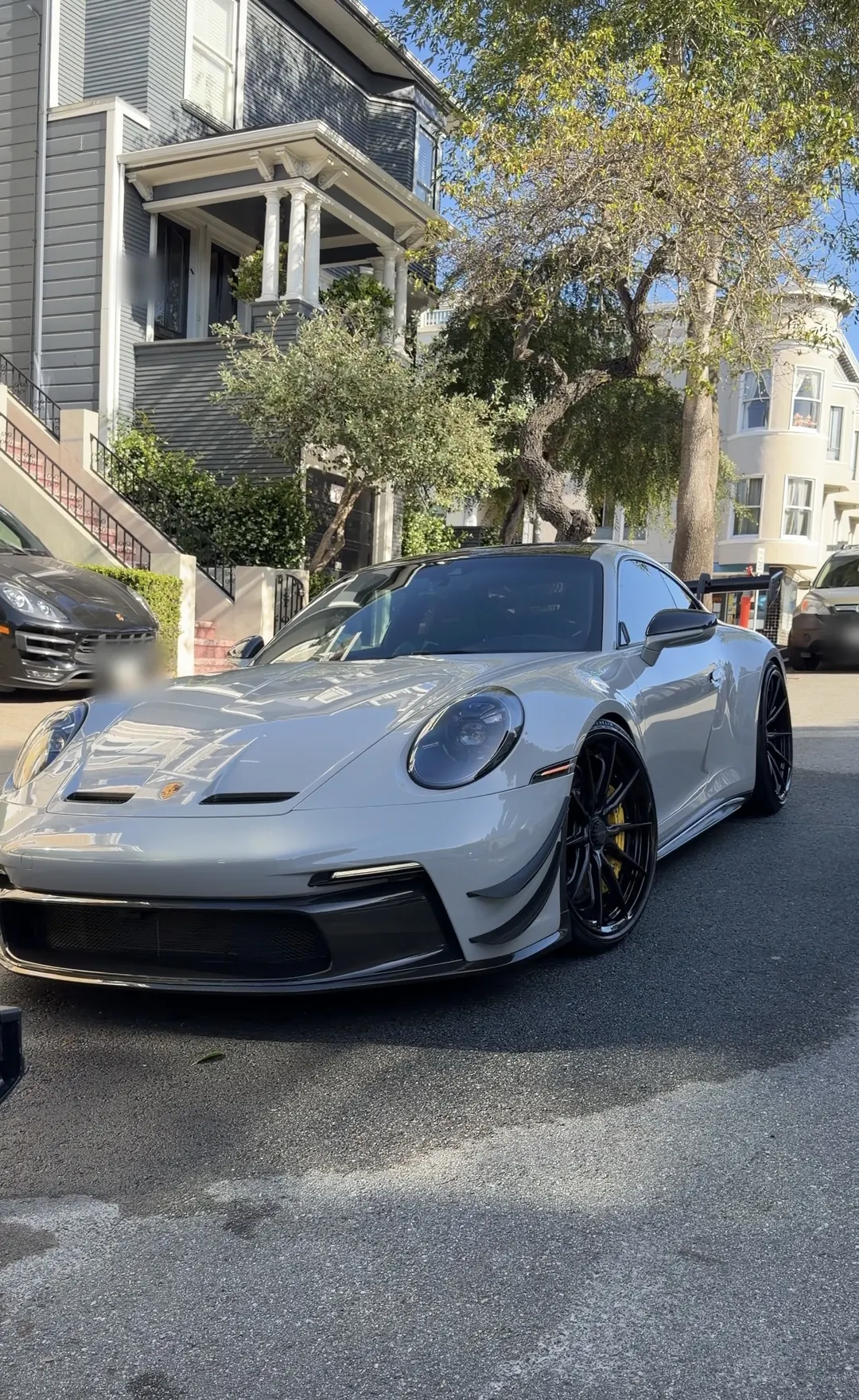
BMW M3 CompetitionMachine polishing · Outer Sunset
Three levels, kept simple
Enhancement, correction, protection.
Most daily drivers need the first. You only need more if the scratches are deep enough to catch a fingernail, or the paint has years of automatic washes in it.
One-step enhancement
A single polishing pass. It removes most light swirls and brings gloss back to paint that looks dull. It’s what the BMW M3 Competition in the photos got.
With the 12-month sealant, sedan$649
Two- and three-step correction
A heavier cutting stage first, then refining passes to put the gloss back. For deeper marring, water spot etching and paint that has been neglected for years.
Two-step with the 12-month sealant, sedan$899
Sealant or ceramic coating
Not optional. Freshly polished paint with nothing on it marks up fast, so every correction ends with a 12-month sealant, a 2-year sealant or a 5-year coating.
One-step with the 5-year coating, sedan$899


Recent work · Outer Sunset
A BMW M3 Competition, polished and coated.
A full interior and exterior detail, iron decontamination, one machine polishing pass on the paint, then Gtechniq EXO v5, the product in our 2-year package. One pass, one stage: the enhancement level above, not a multi-stage correction.
The gloss check along the flank is the whole point. A swirled black car looks grey in the sun however clean it is.
Pricing
What correction costs here.
Every price includes a full interior and exterior detail and the paint decontamination, so it is not comparable with a polish-only quote. We confirm the level after seeing the paint in daylight; the number below is what you pay if that level is right.
| Package | Sedan / coupe | Midsize SUV | Large SUV / truck |
|---|---|---|---|
| One-step correctionwith the 12-month sealant | $649 | $799 | $999 |
| Two-step correctionwith the 12-month sealant | $899 | $1,149 | $1,349 |
| Three-step correctionwith the 12-month sealant | $1,149 | $1,449 | $1,749 |
| One-step correctionwith the 2-Year Sealant | $799 | $949 | $1,149 |
| One-step correctionwith the 5-Year Coating | $899 | $1,049 | $1,249 |
From data/ceramic-pricing.json, the owner-confirmed price sheet. The 2-year and 5-year tiers with two- and three-step correction are on the ceramic coating page.
The process
Clean, polish, inspect, protect.
Decontaminate
Full wash, iron remover and clay. Polishing over bonded grit drags it across the paint and adds marks.
Test a section
We start with the gentlest pad and polish that clears the defect and only step up if it doesn’t.
Polish and wipe
Panel by panel, then an IPA wipe strips the polishing oils so what you see is the real paint, not filler.
Protect
Sealant or coating the same day. Coated cars need to stay dry for a day or two, so we plan the date around the forecast.


Headlight restoration is the same idea on plastic: sanded, polished clear and sealed, $50 per headlight.
Can I get paint correction without a coating?
Not without protection. The minimum is the 12-month sealant, which is why correction starts at $649 on a sedan rather than a polish-only price.
Will it remove every scratch?
No. Anything deep enough to catch a fingernail is usually through the clear coat, and polishing it out would take too much paint. We tell you which marks will stay before we start.
One-step or two-step?
One-step for dull paint and light swirls; two-step when the marring is heavy or the car has had years of automatic washes. We decide on the paint, not on the car’s price. Guide: one-step vs two-step.
How long does it take?
One-step 4 to 6 hours; two-step 6 to 8+ hours. With a coating it becomes a full day, or two on a large vehicle.
Do you polish wrapped or PPF cars?
No. We clean and protect wraps and film, but machine polishing is for paint.
Is there a warranty on the coating?
No. Durability is the manufacturer’s rating for each product, and San Francisco’s salt air and fog shorten it. How the car is washed matters more than anything else.
Pairs with
Correction is step one. Protection is step two.

Get it priced
Send us the paint. We’ll tell you what it needs.
Request a quote with a couple of daylight photos of the worst panels. We reply with the level we recommend and the price for your car.
