Ceramic Coating vs Sealant vs Wax Guide | SF City Wash
SF City Wash Guide

Ceramic Coating, Sealant, or Wax: What Each One Actually Does

Short answer: the spray sealant included with every exterior detail holds up about 2 to 3 months. A ceramic sealant buys you 12 months or 2 years and starts at $399. A hardened ceramic coating starts at $649 for a sedan. Every one of those prices already includes the full interior and exterior detail and the paint decontamination, and any tier can be paired with 1-step, 2-step, or 3-step correction. Wax is the shortest lived of the three, and we sell it only as part of a maintenance wash. None of them make your paint scratch proof. The right pick comes down to where the car parks at night and how long you plan to keep it.

Spray sealant 2 to 3 months Included with every exterior detail. No extra charge.
Ceramic sealant 12 months or 2 years Starts at $399 sedan, no correction. Correction can be added.
Ceramic coating Up to 5 years Starts at $649 sedan, no correction. $899 with a 1-step correction.
The honest version

How long each one really lasts

Every protection product has a number on the bottle and a different number in real life. These are the four tiers we actually apply, in the order we would put money into them.

Wax

How longShortest of the four
PriceAdd-on to a wash
CorrectionNone

Wax appears on our menu only as part of an Exterior Wash and Wax add-on, and it is a finish rather than a protection plan. We have not measured a durability window for it, so we are not going to publish one. If a shop quotes you a specific number of months for a carnauba wax, ask how they arrived at it.

Spray sealant

How long2 to 3 months
PriceIncluded, $0 extra
CorrectionNone

The label says 6 months. With regular driving, rain, and SF fog, what we actually see is 2 to 3 months of active hydrophobic protection. It gets applied to a damp panel after the final rinse on every exterior detail we do, which means a $100 sedan exterior wash already comes with the entry tier of paint protection. Reapply at every detail and it never really lapses.

Ceramic sealant, 12 month and 2 year

How long12 months or 2 years
Price$399 and $549, sedan, no correction
CorrectionOptional, +$250 / +$500 / +$750

Full interior and exterior detail, decontamination and clay bar, then a ceramic sealant applied directly to the paint. At the base price there is no machine polishing step, which makes this tier a good fit for paint that is already in decent condition. If the paint does need work, 1-step, 2-step, or 3-step correction can be added to either sealant. The adders above are for a sedan or coupe.

Ceramic coating, Gtechniq

How long2 to 5 years
Price$649 sedan, no correction. $849 for 5-Year Plus
CorrectionOptional, +$250 / +$500 / +$750

We use Gtechniq C1 and C4, rated for 2 to 5 years depending on maintenance and conditions. The rating is a ceiling, not a promise. A coated car that goes through an automatic wash every other week will not get 5 years out of it, and a hand washed garage car might beat the middle of the range comfortably.

Why the numbers differ

One of these bonds to the paint. Two of them sit on it.

The durability gap is not a marketing gap. It comes from what the product physically does when it hits the clear coat.

01

Wax and sealant sit on top

They form a sacrificial layer over the clear coat. Rain, road grime, soap, and UV work on that layer instead of your paint, which is the whole point of them. It also means they wash away over months. Our spray sealant goes on a damp panel right after the final rinse, spreads with a clean microfiber, and buffs off. That is a five minute step, not a service.

02

Ceramic bonds to the clear coat

A ceramic coating is a liquid polymer, usually silica based, that chemically bonds to your clear coat and cures into a hard, semi-permanent layer. Once cured the surface is hydrophobic, so water beads and runs off instead of sitting, and dirt releases with less effort on the next wash. It does not wash off, which is why the install is measured in hours and the protection in years.

03

That bond is why the prep matters more than the product

Before any coating goes on, every panel gets stripped of polishing oils and residue with an isopropyl alcohol wipe down. Any oil left behind stops the coating from bonding correctly. This is the step that gets rushed most often in this trade, and it is invisible in the final photos, which is exactly why it gets rushed.

04

It goes on panel by panel, not as a spray-over

We apply Gtechniq with a foam applicator, work it in a cross-hatch pattern, let it flash, then level it with a clean microfiber. Flash time changes with temperature and humidity, so it is managed per panel rather than set by a timer. Each panel is inspected under light before we move on.

Want the full sequence, all five stages in order? Read the ceramic coating process.

Read this before you pay for one

What a ceramic coating does not do

Coating gets sold on a lot of claims we will not make. Here is where the honest line sits.

It is not scratch proof

9H is a hardness rating for the coating layer. It is not armor for the car. A coating resists chemical etching and light marring, and it makes the surface far easier to clean. It will not stop a shopping cart, a key, or a badly folded wash mitt.

It does not survive an automatic car wash

Automated car washes use stiff nylon brushes that scratch clear coat, coated or not. They are the single largest source of swirl marks on Bay Area vehicles. Those brushes pick up grit from the car ahead of you and drag it across your paint in circles. After a coating, hand washing or touchless only. This part is not negotiable if you want the coating to last.

It does not fix anything. It preserves everything.

A coating is semi-permanent, so it seals whatever condition the paint is in on the day it goes on. Swirl marks, light scratches, and water spot etching that are there at application get locked underneath for the life of the coating. Removing them is a separate machine polishing job that has to happen first.

It is not a substitute for washing the car

Coated paint sheds water and releases dirt more easily, so washes get faster and less frequent. They do not stop. Bird droppings and tree sap are acidic and will etch a coated panel if they sit long enough. We see that constantly on cars parked under trees.

Entry points

What each tier costs to get into

Sedan and coupe pricing with no machine correction, which is the lowest rung on each tier. Every ceramic price below already includes the full interior and exterior detail and the paint decontamination. The only two things that move the number are how much correction the paint gets and how long the protection lasts.

  • Spray sealant: no separate charge. It is part of the exterior detail, which runs $100 for a sedan, $125 for a midsize SUV, and $150 for a large SUV or truck.
  • 12-month ceramic sealant: $399. Full detail, decontamination and clay bar, then a Gtechniq sealant on the paint.
  • 2-year ceramic sealant: $549. The same work with a longer-lasting Gtechniq sealant.
  • 5-year ceramic coating: $649. A hardened Gtechniq ceramic coating applied panel by panel instead of a spray sealant.
  • 5-Year Plus, two layers: $849. A ceramic base coat plus a hydrophobic topcoat.
  • Correction, added to any tier: +$250, +$500, or +$750 for a sedan. That is 1-step, 2-step, and 3-step. Correction is never sold on its own, it always comes with at least a 12-month sealant.

Final price depends on vehicle size, paint condition, panel count, and how much correction the paint needs. Larger vehicles and heavily neglected paint are quoted individually. The full sheet, every package across all three vehicle sizes, lives on the coating page.

See the full ceramic price sheet →
The fork in the road

Do you need paint correction first?

Correction is not required. It is strongly recommended, and the reason is mechanical rather than commercial: the coating is semi-permanent, so it seals whatever is underneath it.

The test is simple and you can run it yourself. Pull the car into direct sunlight and look down the hood at an angle. If the paint looks clean and the reflections are sharp, a light enhancement pass is enough. If you see circular haze that moves as you move, that is swirl marks, and a coating applied over them keeps them there for years.

This is also why our 12-month and 2-year sealant packages include no correction. They are priced for paint that is already in decent shape. If your paint is not, the sealant will not hide it either.

Correction is quoted, not priced

Paint condition, panel count, clear coat thickness, and defect type all change how long the job takes and what it costs. A mildly swirled coupe and a heavily marred full-size SUV are not the same work, and a flat rate would either undercharge one or overcharge the other. We inspect first, then quote the actual work.

How paint correction works →
Aftercare

Living with a coated car

A coating changes the maintenance routine. It does not remove it. Four habits do most of the work.

  • Avoid automatic car washes permanently. The brushes create swirl marks and the harsh chemicals degrade the coating.
  • Use pH neutral soap when hand washing. Aggressive degreasers strip hydrophobics faster than anything else in a home wash kit.
  • Do not let bird droppings or tree sap sit. Both are acidic and can etch through a coating over time. If you park under trees, sap removal is its own job and it gets harder the longer it bakes on.
  • Top up annually with a ceramic spray booster to refresh the hydrophobics.

The cure window, which people underestimate

24 hours

Minimum before any water contact. This is the one that forces us to plan around the forecast.

7 days

Before the first wash.

2 to 4 weeks

To reach full hardness.

We send written aftercare instructions with every coating appointment, specific to the product applied.

Local conditions

If the car lives outside in San Francisco

Bay Area salt air and fog can reduce coating longevity without proper upkeep. That is not a reason to skip the coating, it is a reason to do the annual top coat spray rather than treat the install as finished.

The case for coating on a daily driver here is specific: UV exposure, salt air off the Bay, and parking in tight spaces all work on the paint constantly. A coating cuts maintenance time noticeably, because rain sheets off and the surface stays cleaner between washes, and it holds the paint condition you paid to get.

We regularly see the opposite pattern too: cars parked under trees in the Sunset and the Richmond that pick up sap and bird droppings faster than the owner can keep up with. On those, a coating does not stop the mess, it just buys you more time before the mess does damage.

Decide

Which one to actually buy

Three situations cover most of the cars we work on. Find yours.

If the car is garaged

Garaged, washed regularly, and you are not keeping it long

Take the spray sealant.

It is already in the exterior detail at no extra cost. Book a detail every 2 to 3 months and the protection never lapses. Spending $649 to coat a car you are selling next year is not a good trade.

Exterior detail, $100 and up →
If the car lives on the street

Daily driver, street parked, paint is in decent shape

Take the 2-year ceramic sealant.

$549 for a sedan with no correction step, detail and decontamination included. It is the tier that makes sense when you want real protection but the paint does not yet justify machine work. If it does, 1-step correction on the same tier is $799.

Compare sealant packages →
If you are keeping it

Five or more years with the car, or paint you want back to sharp

Take correction plus a 5-year coating.

$899 for a sedan with a 1-step correction, $1,149 with a 2-step. This is the path that fixes the paint and then protects the fixed version. Over five years it works out cheaper than repeated sealant cycles, and it is the one that holds resale condition.

Get a coating quote →
Where the proof is, and is not

We have not photographed a full coating job yet

Our public job record covers 11 documented vehicles, and every one of them is an interior detail, a full package, or a headlight restoration. None of them is a ceramic coating or a paint correction. Rather than borrow interior before and after photos to sell paint protection, we would rather say that plainly. These are process photos from real coating and correction work. They are not before and after pairs.

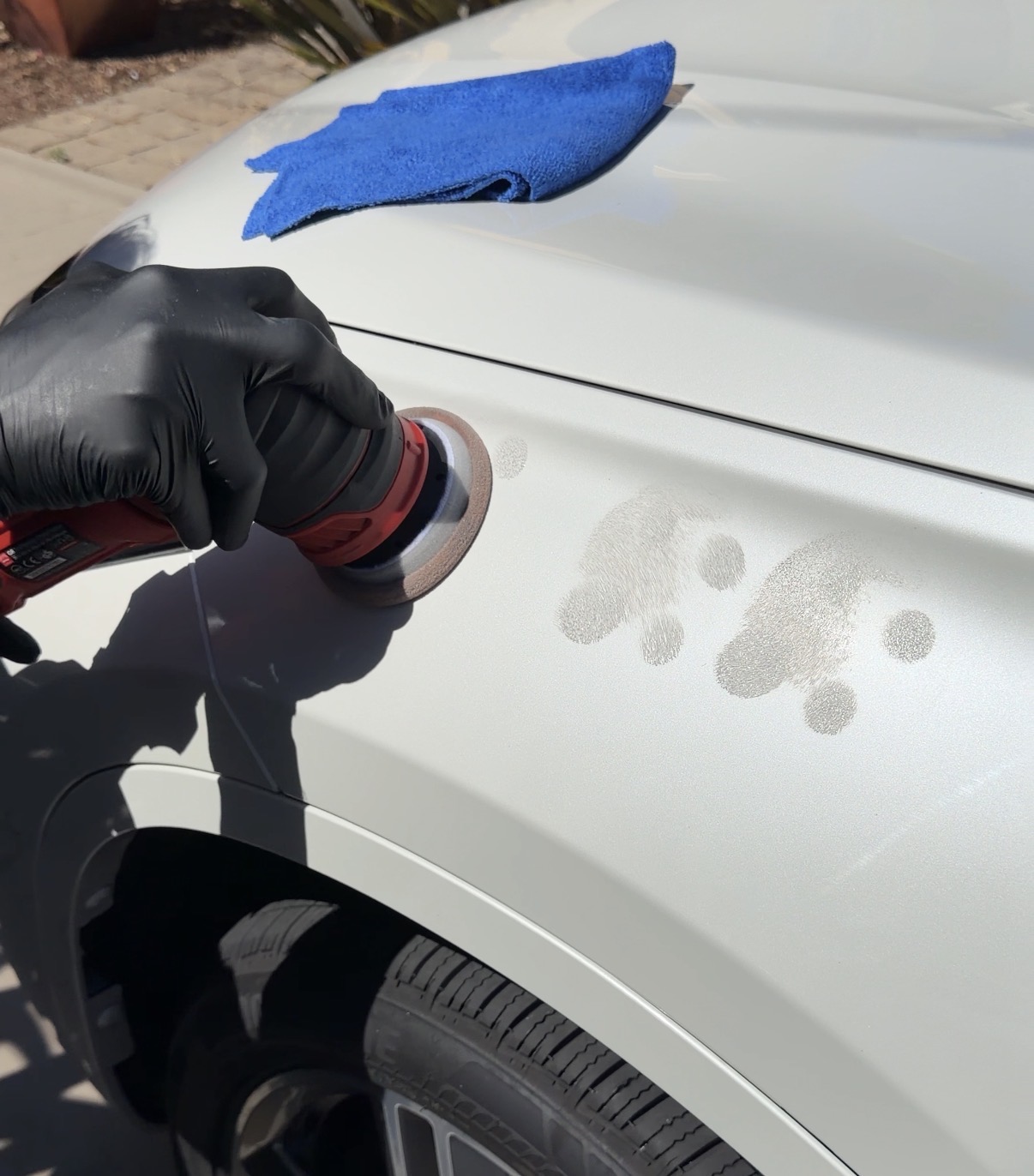
Rotary polisher pad working a section of white paint during a correction pass
Correction pass. Machine polishing happens before any coating goes on.
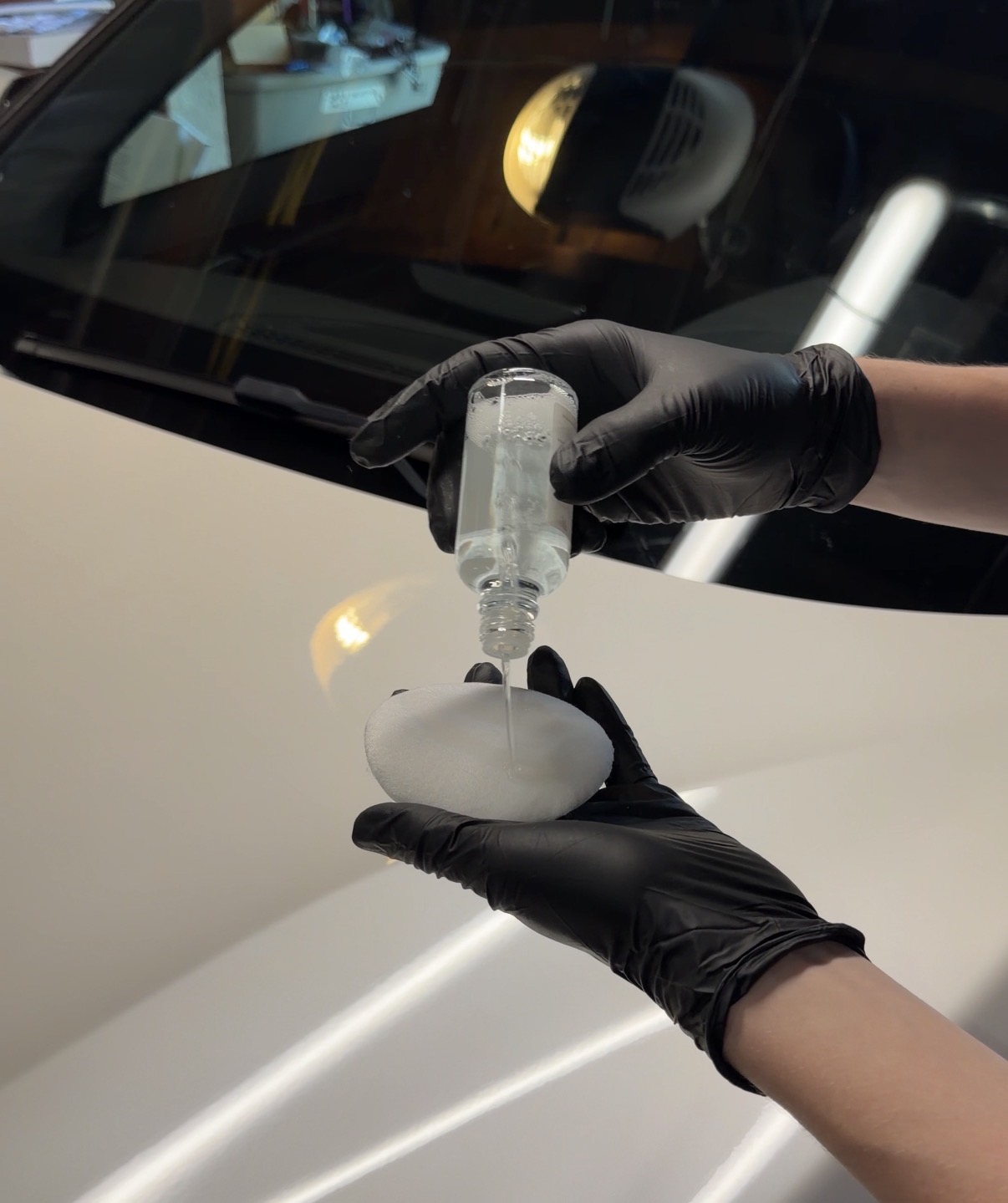
Ceramic coating liquid being dosed onto a foam applicator pad
Coating dosed onto a foam applicator. Panel by panel, not a spray-over.
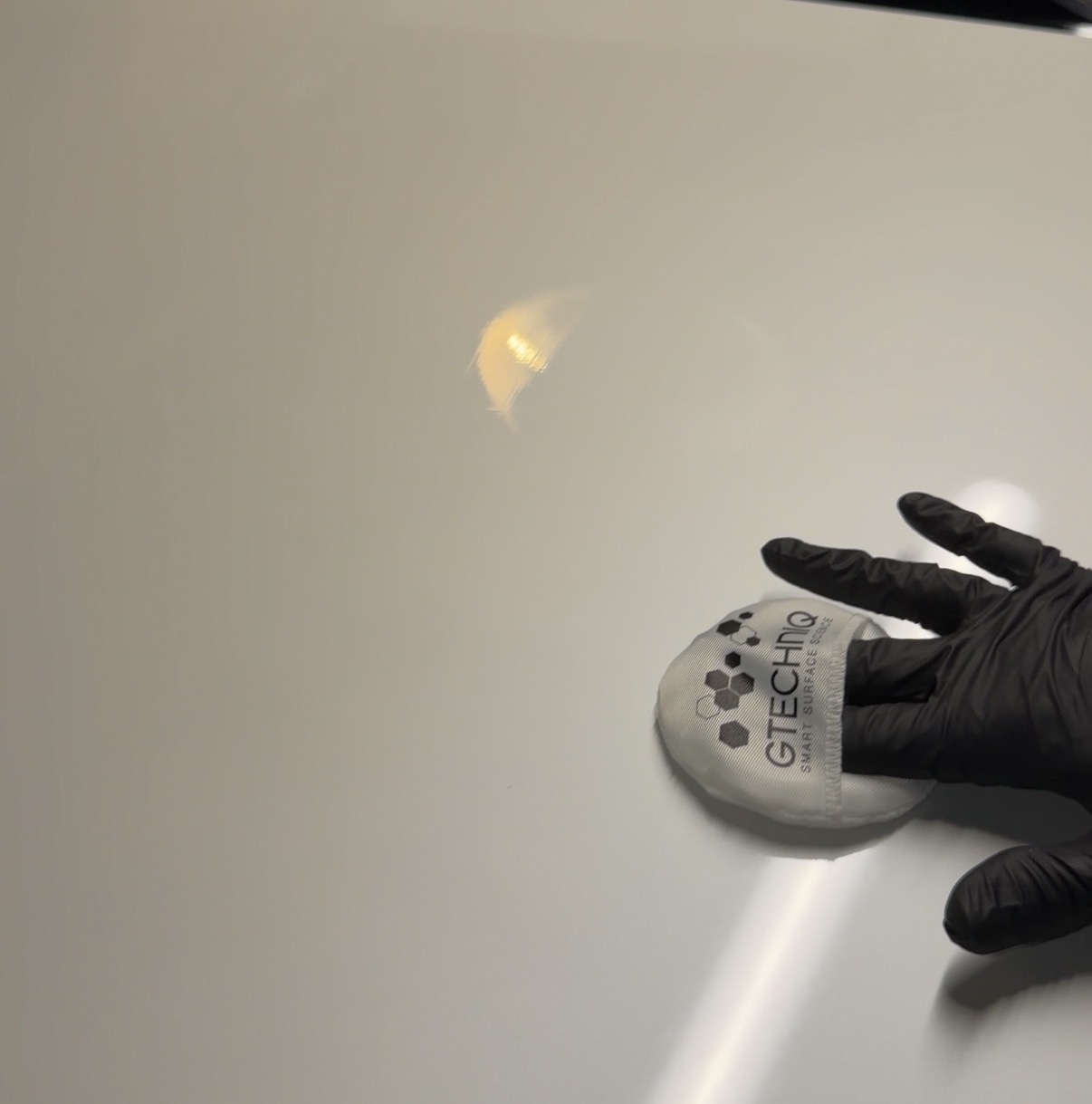
Gtechniq applicator pad laying coating across a white painted panel
Gtechniq going down in a cross-hatch pattern before leveling.

What we can show you instead

The full five-stage coating process, written out step by step, and the actual products and machines we put on cars. If you want to check our work before spending four figures, those two pages are the honest version of a proof gallery.

The coating process →

What is documented

11 real jobs across San Francisco and Daly City, with before and after photos at the customer address. All interior and full-package work, which is the majority of what we do. Judge the standard from those.

See documented jobs →
Common questions

Paint protection FAQ

Is ceramic coating better than wax?
For durability, yes. Wax and sealant sit on top of the paint and wash away over months. A ceramic coating is a liquid polymer, usually silica based, that chemically bonds to the clear coat and lasts years. Wax is a finish. A coating is protection. They are not really competing for the same job, and the spray sealant we apply at the end of every exterior detail is much closer to wax than it is to a coating.
How long does a ceramic coating actually last?
Gtechniq C1 and C4 are rated for 2 to 5 years depending on maintenance and conditions. Bay Area salt air and fog can reduce longevity without proper upkeep, and an annual top coat spray maintains the hydrophobics. The rating is a ceiling, not a guarantee. How the car gets washed is the single biggest variable.
Does ceramic coating prevent scratches?
No. 9H is a hardness rating for the coating layer, not armor for the car. Automated car washes use stiff nylon brushes that scratch clear coat, coated or not, and they are the single largest source of swirl marks on Bay Area vehicles. A coating adds chemical resistance and makes the surface far easier to clean. It does not stop physical damage.
Do I still have to wash a coated car?
Yes. A coated car is easier to wash, not exempt from washing. Use pH neutral soap, hand wash or touchless only, and do not let bird droppings or tree sap sit on the paint, because both are acidic and will etch. Top up annually with a ceramic spray booster to refresh the hydrophobics.
Does my car need paint correction before ceramic coating?
Correction is not required, but it is strongly recommended. A ceramic coating is semi-permanent and it seals whatever is underneath it. If your paint looks good in direct sunlight, a light enhancement pass is enough. If you have heavy swirling or oxidation, a more thorough correction before coating delivers a dramatically better final result. Our 12-month and 2-year sealant packages include no correction, which is exactly why they suit paint that is already in good shape.
How much does ceramic coating cost?
Sedan pricing with no machine correction: the 12-month ceramic sealant is $399, the 2-year sealant is $549, the 5-year coating is $649, and the two-layer 5-Year Plus is $849. Every one of those already includes the full interior and exterior detail and the paint decontamination. Adding correction to a sedan is +$250 for 1-step, +$500 for 2-step, and +$750 for 3-step, so a 5-year coating with a 1-step correction is $899. Midsize SUVs and large SUVs or trucks cost more, and every combination is listed on the ceramic coating page.
More answers on booking, timing, and service areas are on the full FAQ.

Tell us where the car parks.

Coating and correction are quoted after we look at the paint. Send a few photos and your vehicle size and we will tell you which tier is worth it and which one is not. If you just want the detail with the sealant, that one you can book outright.

Or text us at (415) 360-1964. Open every day, 8 AM to 7 PM.